
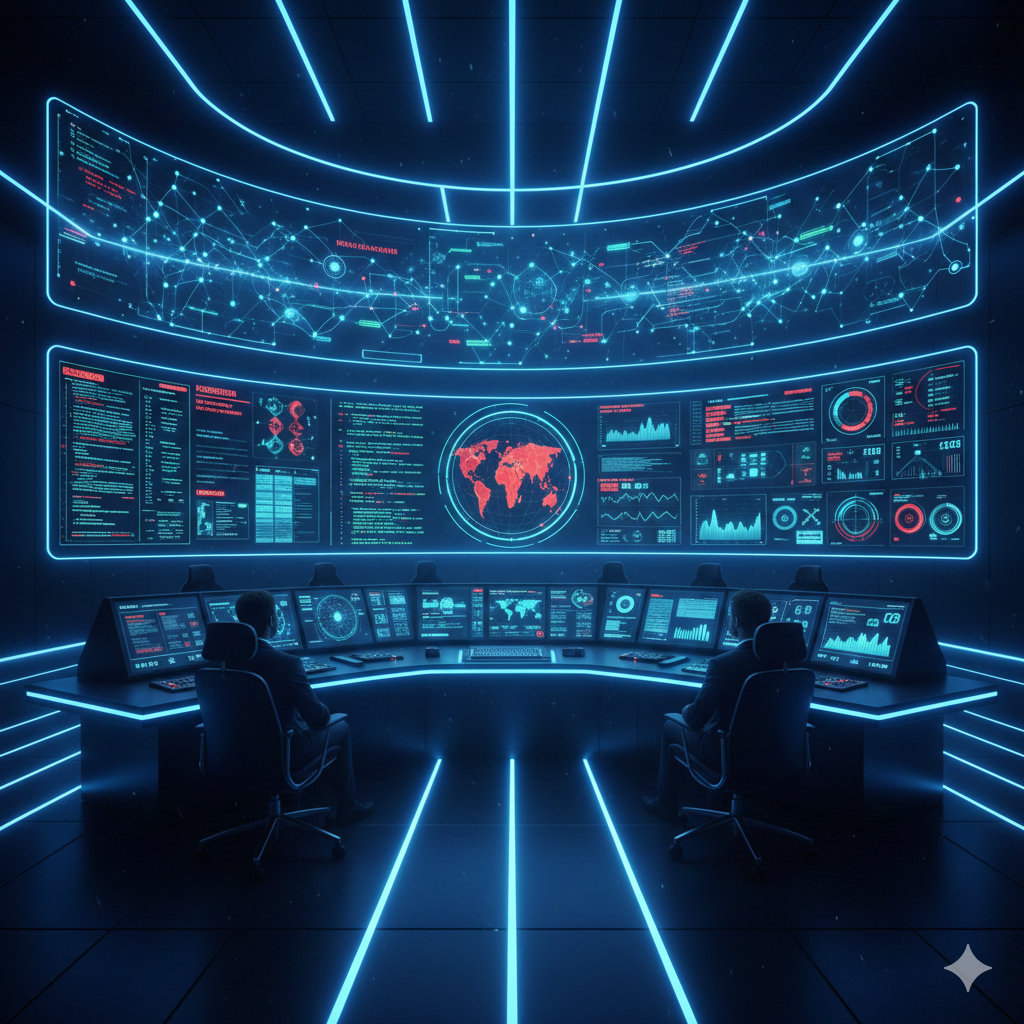
Let me take you into a room.
A quiet room.
A humming room.
A room where the air tastes like electricity.
Your SOC.
But not the SOC you know.
Not the SOC filled with twenty different screens, each screaming for your attention.
Not the SOC cluttered with dozens of dashboards, each claiming to be the most important.
Not the SOC drowned in browser tabs, pop-up alerts, and analyst fatigue.
No.
I want you to imagine a different SOC.
A SOC where everything is orchestrated — elevated — unified.
A SOC where your entire cybersecurity health beats inside one cloud-powered dashboard.
Living.
Breathing.
Updating.
Evolving.
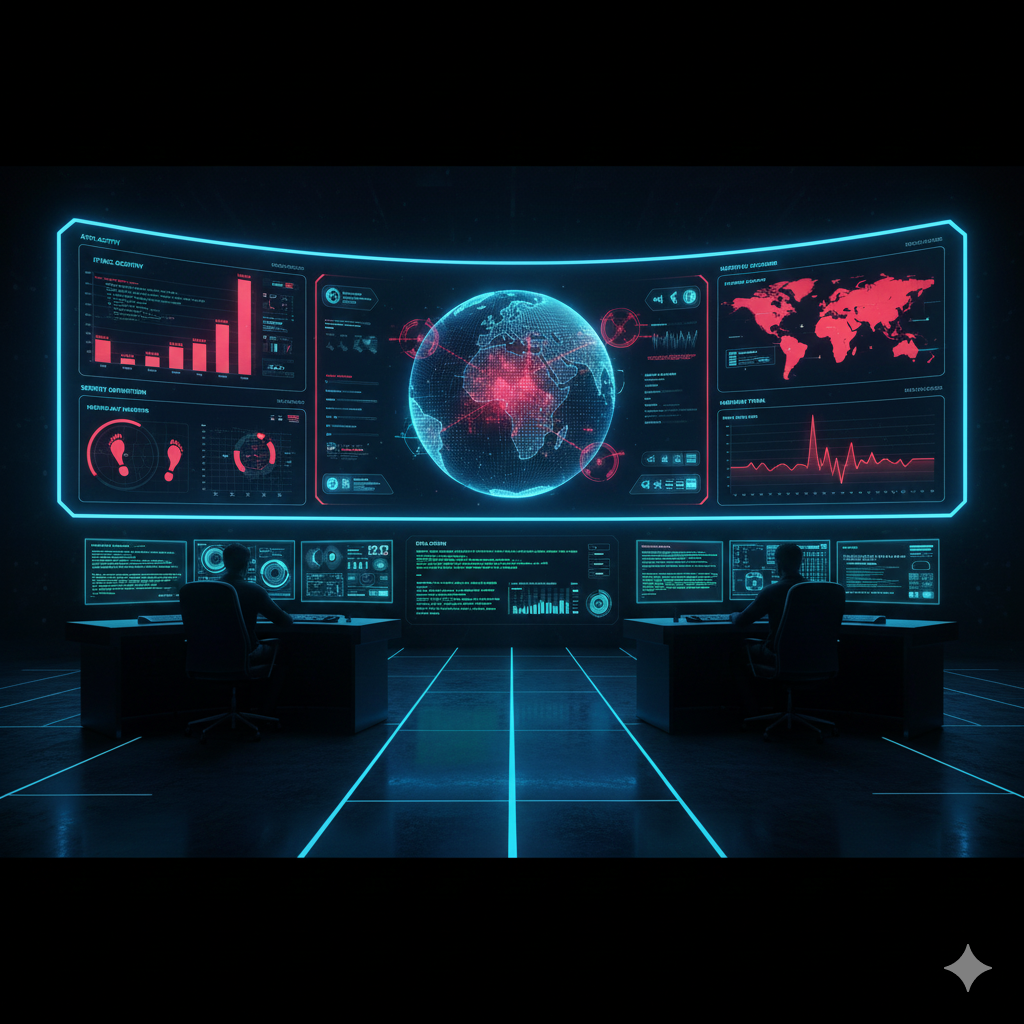
This is the dashboard architecture described inside the Cloud SOAR transcript you shared — a design born not from theory, but from battlefield necessity. And if Eugene Schwartz were alive today, typing this with his fingertips carved from raw persuasion, he would tell you this:
“A dashboard is not a tool.
It is a mechanism.
And a mechanism must perform.
It must act.
It must reveal.”
To understand how to use cloud-orchestrated dashboards to monitor cybersecurity health, you must understand the five moving parts that make this machine unstoppable.
Widgets: The Living Building Blocks of Cyber Intelligence
Let me begin bluntly:
Widgets are not graphics.
They are not cosmetics.
They are not illustrations.
They are windows.
Windows into the health of your SOC.
Windows into the teeth of an attack.
Windows into the truth that your logs, alerts, and event streams desperately want you to see.
Each widget — whether a bar chart, a heat map, a table, a matrix, or a time-series graph — is a miniature battlefield.
A microcosm of risk, activity, and signal.
View them as mere charts and they will betray you.
View them as instruments, and they will empower you.
Each widget expresses:
- Attack activity
- Severity distribution
- Case volume
- Response aging
- Endpoint behavior
- Playbook execution rates
- Identity anomalies
- Threat intel correlations
- Firewall trigger spikes
- Cloud workload deviations
Together, they form a living map — a dynamic atlas of your entire digital estate.
This is what cloud-orchestrated dashboards allow:
Not pretty visuals.
Actionable visuals.
Let me illustrate something.
A bar chart of incident severity is not “a bar chart.”
It is a fragmentation grenade.
Because when that “critical” bar jumps from 3 to 11, you are staring at an invasion in progress.
A heat map showing unusual login locations is not “a heat map.”
It is a thermal scanner revealing enemy footprints.
A timeline widget showing sharp spikes in failed authentications is not “a timeline.”
It is a heartbeat monitor — and the patient is coding red.
This is the mindset required to use cloud dashboards effectively:
Treat widgets as soldiers on your battlefield.
Each one carries intelligence.
Each one carries a signal.
Each one carries truth.
Drilldowns: The Truth Beneath Every Surface
Eugene Schwartz believed in depth.
He believed that the secret behind every behavior — every decision — every result — lies beneath the surface.
Beneath the headline.
Beneath the metric.
Beneath the number.
And this belief aligns perfectly with drilldowns — arguably the most overlooked power of a cloud-orchestrated dashboard.
Let me explain.
You click a widget.
Suddenly you descend into the guts of the incident:
- The raw timeline
- The complete evidence trail
- The triggering IP addresses
- The host behavior
- The correlated logs
- The automation actions that fired
- The playbooks executed
- The identities impacted
- The endpoint artifacts collected
This is not convenient.
This is speed.
This is precision.
This is no more guessing.
Drilldowns eliminate:
- Analyst debates
- “Maybe it’s this…”
- “It could be that…”
- “I think…”
- “Let’s check later…”
They replace them with:
- “Here is the proof.”
- “Here is the source.”
- “Here is the evidence.”
- “Here is what actually happened.”
No bias.
No fog.
No narrative.
Just the truth.
Because in cybersecurity, truth is your only weapon.
And drilldowns deliver truth on demand.
This is how you monitor cybersecurity health with clarity instead of chaos:
- You see a spike.
- You click the spike.
- You see the exact incidents behind it.
- You click the incident.
- You evaluate the exact sequence of events.
In 10 seconds, you go from macro → micro → microscopic.
This is the equivalent of zooming from a satellite view of Earth
straight down to a single tree root in a forest —
without losing context.
Time-Range Analysis: The KPI X-Ray Machine
Let me tell you something every SOC manager knows but rarely says aloud:
The danger is not in what you see.
The danger is in what you do not see yet.
Threats grow over time.
Patterns form over time.
Weaknesses reveal themselves over time.
This is why cloud dashboards include instant time-range switching:
- Last hour
- Last 24 hours
- Last 7 days
- Last 30 days
- Custom windows
This is not just optional.
It is essential.
Because time-range analysis transforms static data into intelligence.
Let me paint a picture:
You see 12 critical alerts.
Is that good?
Is that bad?
Is that normal?
Or is this the beginning of a pattern that will escalate into a full-on breach?
You don’t know — until you adjust the time range.
You widen the window.
You zoom out.
You x-ray the KPIs.
Now you can see:
- Whether incidents are accelerating
- Whether a threat actor is probing your defenses
- Whether a misconfigured system is silently erupting
- Whether an internal user is behaving abnormally
- Whether a playbook is failing to contain certain threats
- Whether SOC workload is trending upward dangerously
This is the difference between reaction and foresight.
Time-range analysis gives you:
- Context
- Trend lines
- Aging patterns
- Seasonality
- Recurrence indicators
- Anomaly visibility
Think of it as peeling back the layers of time — exposing vulnerabilities that would otherwise remain hidden.
When you use this feature properly, your dashboard stops being a scoreboard.
It becomes a radar.
A radar that tells you where the storm came from.
Where it is heading.
And when it will hit.
Auto-Refresh Monitoring: Real Time or Nothing
If there is one feature SOC teams underestimate — one feature they ignore until disaster strikes — it is auto-refresh.
Let me be blunt.
A manually refreshed dashboard is already outdated.
And an outdated dashboard kills.
Cyber attacks evolve minute by minute.
Some evolve second by second.
When your dashboard auto-refreshes:
- Every widget updates live
- Every KPI adjusts instantly
- Every threat is visible without delay
- Every spike alerts you the moment it happens
- Every anomaly reveals itself in real time
This is not a luxury.
This is survival.
Because without real-time visibility:
- Incidents age in silence
- Malware spreads unnoticed
- Lateral movement becomes invisible
- Credential abuse goes undetected
- Firewall anomalies are delayed
- Endpoint behavior is masked
- Playbooks run too late
- Analysts lose their window
But with auto-refresh?
Your dashboard becomes a living instrument.
A heartbeat monitor for your entire security ecosystem.
Every second matters.
Every second updates.
Every second protects.
This is what cloud-orchestrated dashboards uniquely deliver:
A SOC that breathes.
Not a static system.
Not a frozen UI.
Not a stale dataset.
A living, pulsing flow of real-time intelligence.
Unified Orchestration: The Engine Behind It All
Now we arrive at the heart of the system.
The pulse.
The mechanism.
The engine.
Orchestration.
Without orchestration, your dashboard is a pretty picture.
With orchestration, your dashboard becomes a weapon.
Let me explain why.
Cloud orchestration unifies every data source you rely on:
- SIEM
- SOAR
- Threat intelligence feeds
- EDR platforms
- Identity and access systems
- Firewalls
- Cloud platforms
- Application logs
- Network telemetry
- Case management systems
It does not merely “collect” data.
It normalizes it.
Correlate it.
Enhances it.
Augments it.
Visualize it.
Feed it into widgets.
Feed it into alerts.
Feeds it into decision-making.
Feeds it into automation.
This—right here—is the difference between a dashboard you look at
and a dashboard that acts for you.
A dashboard that can:
- Trigger playbooks
- Automate enrichment
- Escalate incidents
- Notify teams
- Quarantine endpoints
- Lock accounts
- Block IPs
- Update tickets
- Feed SIEM contexts
- Inform analysts
- React faster than any human
This is not monitoring.
This is co-piloting.
This is not visualization.
This is execution.
This is not a dashboard.
This is an orchestrated command center.
Cloud SOAR dashboards work because they do not operate in isolation.
They operate in coordination — as part of a single system intelligence moving across your environment.
When you use unified orchestration properly, your SOC leaps from:
Reactive → Proactive
Fragmented → Unified
Manual → Automated
Slow → Immediate
Blind → All-seeing
This is what a cloud-orchestrated dashboard makes possible:
A cybersecurity environment that thinks with you, moves with you, and acts faster than you ever could alone.
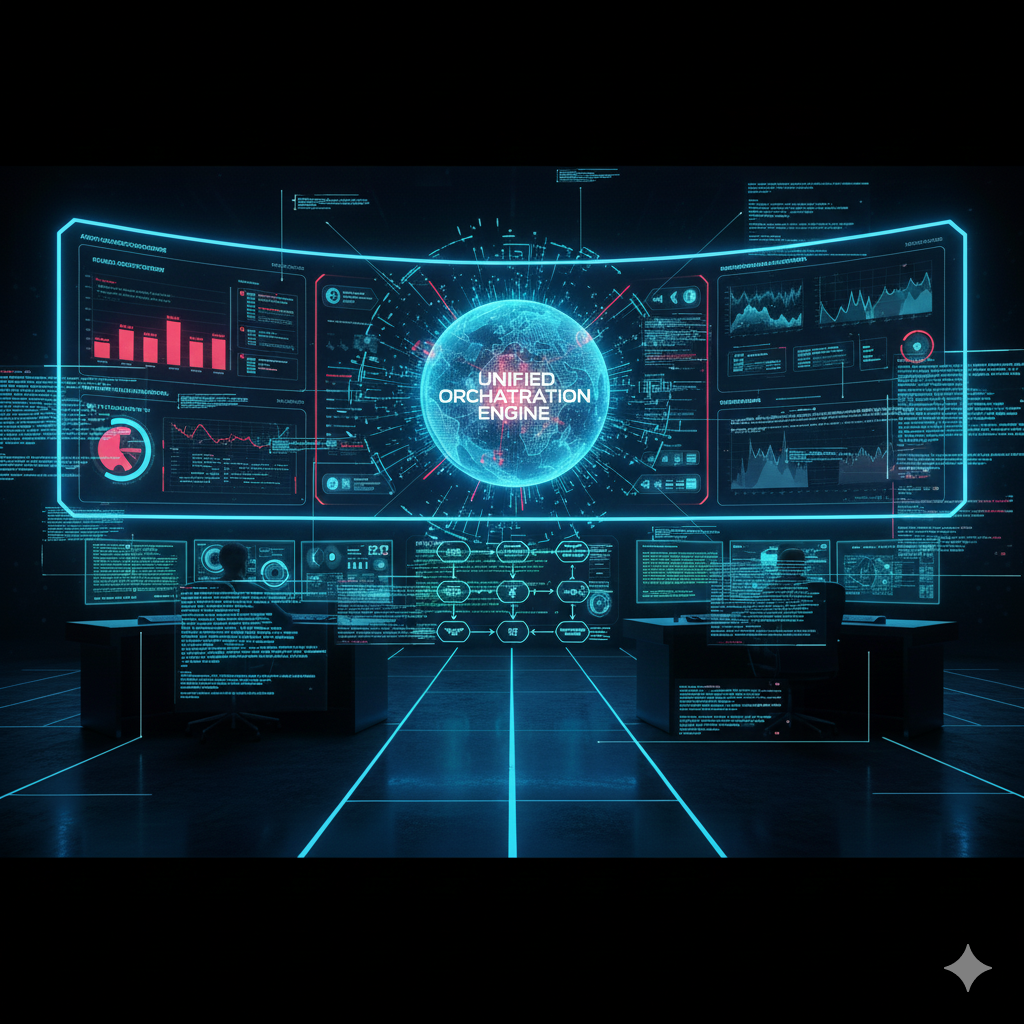
How to Use a Cloud-Orchestrated Dashboard for Maximum Cyber Health
Everything so far explains why this architecture matters.
Now let’s get tactical.
Here is how you, today, can use such a dashboard to maintain razor-sharp cybersecurity health.
1. Begin Every Shift With a “Widget Scan”
Look at:
- Incident count
- Severity distribution
- Threat intel hits
- Endpoint health
- Authentication anomalies
- Firewall spikes
- Cloud workload shifts
Do this before anything else.
In three minutes, you’ll know the SOC’s health the way a doctor reads a patient’s vitals.
2. Drill Down Into Anything Unusual
A spike?
Click it.
An anomaly?
Click it.
A deviation?
Click it.
Let drilldowns reveal the truth beneath every number.
3. Compare Time Ranges Daily
Check:
- Last 24 hours vs. Last 7 days
- Last 7 days vs. Last 30 days
You will begin to see patterns no analyst ever catches manually.
4. Keep Auto-Refresh Enabled at All Times
Never disable it.
Never rely on manual refreshing.
Real-time monitoring is the difference between spotting a breach early and reading about it in tomorrow’s headlines.
5. Let Orchestration Guide Your Decisions
Trust the automation.
Trust the correlations.
Trust the unified data.
Use the dashboard not just to see —
but to act.
The Final Thought: Your Dashboard Is a Weapon
Let me end with the same intensity with which Eugene Schwartz sold the greatest transformations of his time.
Your cloud-orchestrated dashboard is not software.
It is not a UI.
It is not a tool.
It is a weapon.
A living, breathing, evolving instrument of cyber defense.
Every widget is a reconnaissance soldier.
Every drilldown is a truth serum.
Every time range is an x-ray.
Every refresh is a heartbeat.
Every orchestration is a coordinated strike.
Use it this way.
Respect it this way.
Master it this way.
And your SOC will not merely monitor cybersecurity health —
it will command it.
Control it.
Strengthen it.
Fortify it.
This is the future.
And that future begins with one unified cloud dashboard, alive beneath your fingertips.
cloud dashboards, cybersecurity health, SOC monitoring, cloud SOAR, SIEM dashboards, security automation, threat visibility, Eugene Schwartz style, cybersecurity analytics, real-time dashboards,
3 thoughts on “How to Use Cloud-Orchestrated Dashboards to Monitor Cybersecurity Health.”
Comments are closed.