
Focus Keyword: Best smart thermostat for California TOU plans
Target Goal: Show how a $250 investment can save $300+ annually on a PG&E or SCE bill
1. Introduction: The $0.55/kWh Shock
At 5:07 PM in most California homes, nothing looks different.
The sun is still out. The house feels warm. The AC kicks on automatically, just like it always has.
But behind the scenes, something brutal just happened.
Your electricity rate quietly tripled.
For millions of Californians on PG&E, SCE, or SDG&E Time-of-Use (TOU) plans, the hours between 4 PM and 9 PM aren’t just “peak.” They’re punitive. In some regions, electricity during these hours can hit $0.50–$0.55 per kWh, turning a normal summer afternoon into a financial ambush.
This is the part no one explains clearly:
It’s not how much energy you use—it’s when you use it.
And that’s exactly where most homes lose money.
The Real Problem Isn’t High Rates — It’s Dumb Timing
Most households still rely on:
- Old programmable thermostats
- Static schedules set years ago
- Or worse—manual adjustments that react after the house is already hot
These systems were designed for a flat-rate world that no longer exists.
California’s grid doesn’t reward consistency anymore.
It rewards anticipation.
And that’s why smart thermostats—real smart thermostats, not Wi-Fi toys—have become one of the highest-ROI energy upgrades you can make.
The Promise of This Guide
We tested the top smart thermostats against real California TOU plans—specifically PG&E E-TOU-C—to answer one question:
Which smart thermostat actually pays for itself in a single summer?
Not in theory.
Not in marketing slides.
But on a real bill, during a real heatwave, in a real California home.
2. Understanding the TOU “Pre-Cooling” Strategy
If you want to win against TOU pricing, you have to stop thinking about air conditioning as comfort—and start thinking about it as storage.
Your Home Is a Battery (Whether You Like It or Not)
Every house has something called thermal mass.
That’s the combined heat-holding ability of:
- Walls
- Floors
- Furniture
- Insulation
- Even the air itself
When you cool your home earlier in the day—before peak pricing starts—you’re effectively charging that thermal mass.
Then, during expensive hours, the house slowly releases that stored “cool,” reducing or eliminating AC runtime.
This is called pre-cooling, and it’s the single most important strategy for TOU savings.
Load Shifting vs. Energy Conservation
Here’s the mindset shift most Californians miss:
- ❌ Energy conservation: “Use less electricity.”
- ✅ Load shifting: “Use electricity when it’s cheap and clean.”
Between 10 AM and 3 PM, California’s grid is flooded with solar power. Prices are lower. Carbon intensity is lower. Utilities want you using energy.
Between 4 PM and 9 PM, solar drops off, demand spikes, and fossil fuel plants ramp up fast.
Smart thermostats don’t just reduce energy usage—they re-schedule it.
And when done correctly, the savings are dramatic.
3. The Comparison Review: Top Smart Thermostats for California TOU Plans
Not all smart thermostats are created equal—especially under California’s aggressive TOU structures.
We evaluated three popular contenders based on TOU intelligence, utility integration, and real-world flexibility.
The Top 3 Contenders
Let’s break down what actually matters.
Ecobee Smart Thermostat Premium: The TOU Power User’s Choice
Ecobee doesn’t guess.
It calculates.
Its eco+ system pulls in:
- Utility TOU rates
- Local weather forecasts
- Occupancy patterns
- Room-by-room temperature data
Then it actively pre-cools your home before peak pricing begins, even adjusting dynamically if a heatwave hits earlier than expected.
The killer feature?
Remote sensors.
Instead of cooling your hallway thermostat at 2 PM while your bedroom stays warm, Ecobee balances comfort across rooms—so drifting to 78°F during peak hours doesn’t feel like punishment.
This is the thermostat for people who want control, transparency, and data.
Google Nest Learning Thermostat (4th Gen): The Effortless Optimizer
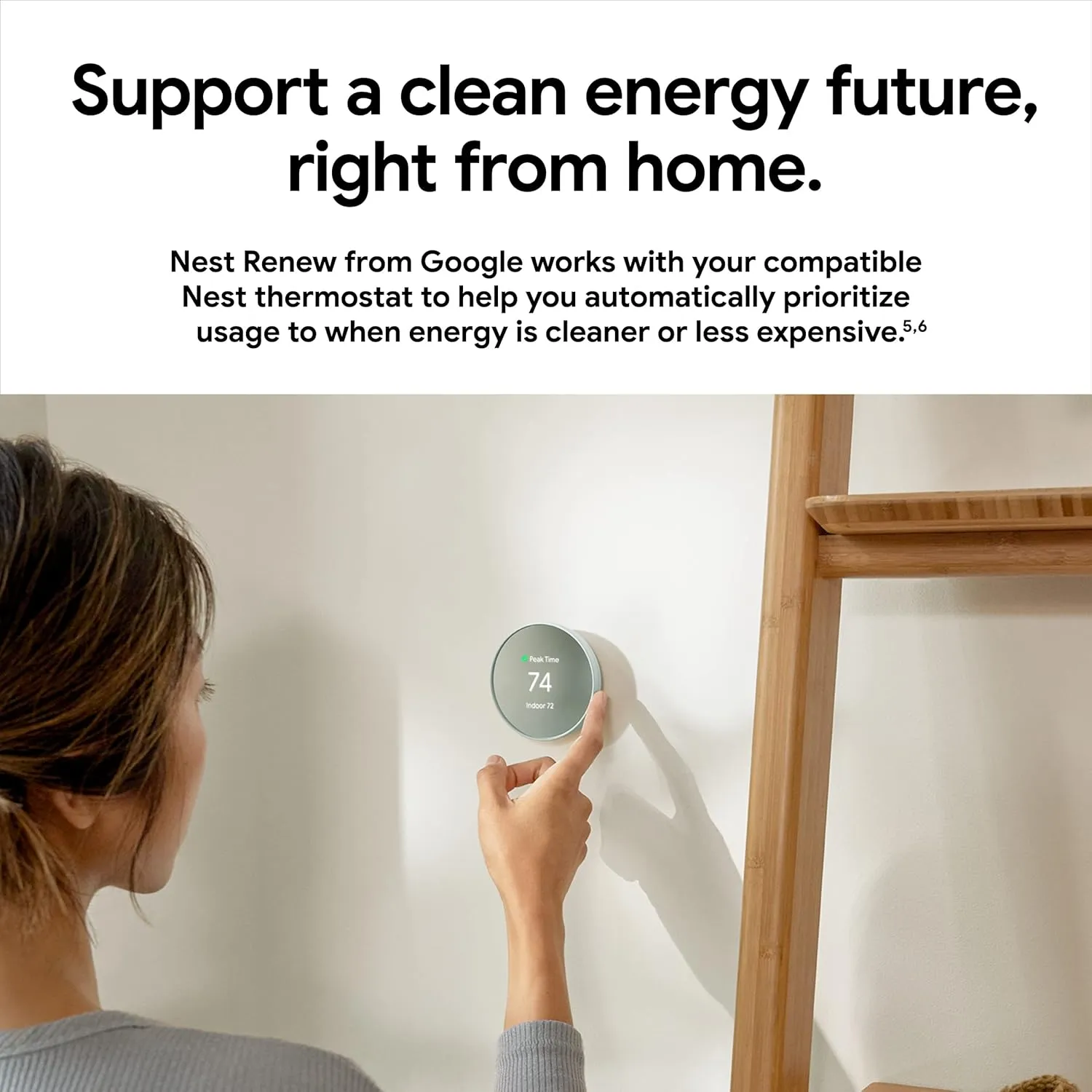
Nest’s strength is simplicity.
It watches what you do, learns your habits, and quietly optimizes without asking many questions.
With Nest Renew, it automatically shifts usage toward cleaner energy hours and participates in utility programs when available.
The tradeoff?
You don’t get the same granular visibility or manual override power as Ecobee. For many users, that’s a benefit. For power optimizers, it’s a limitation.
Nest is ideal if you want savings without thinking about it.
Emerson Sensi Touch 2: The Honest Budget Option
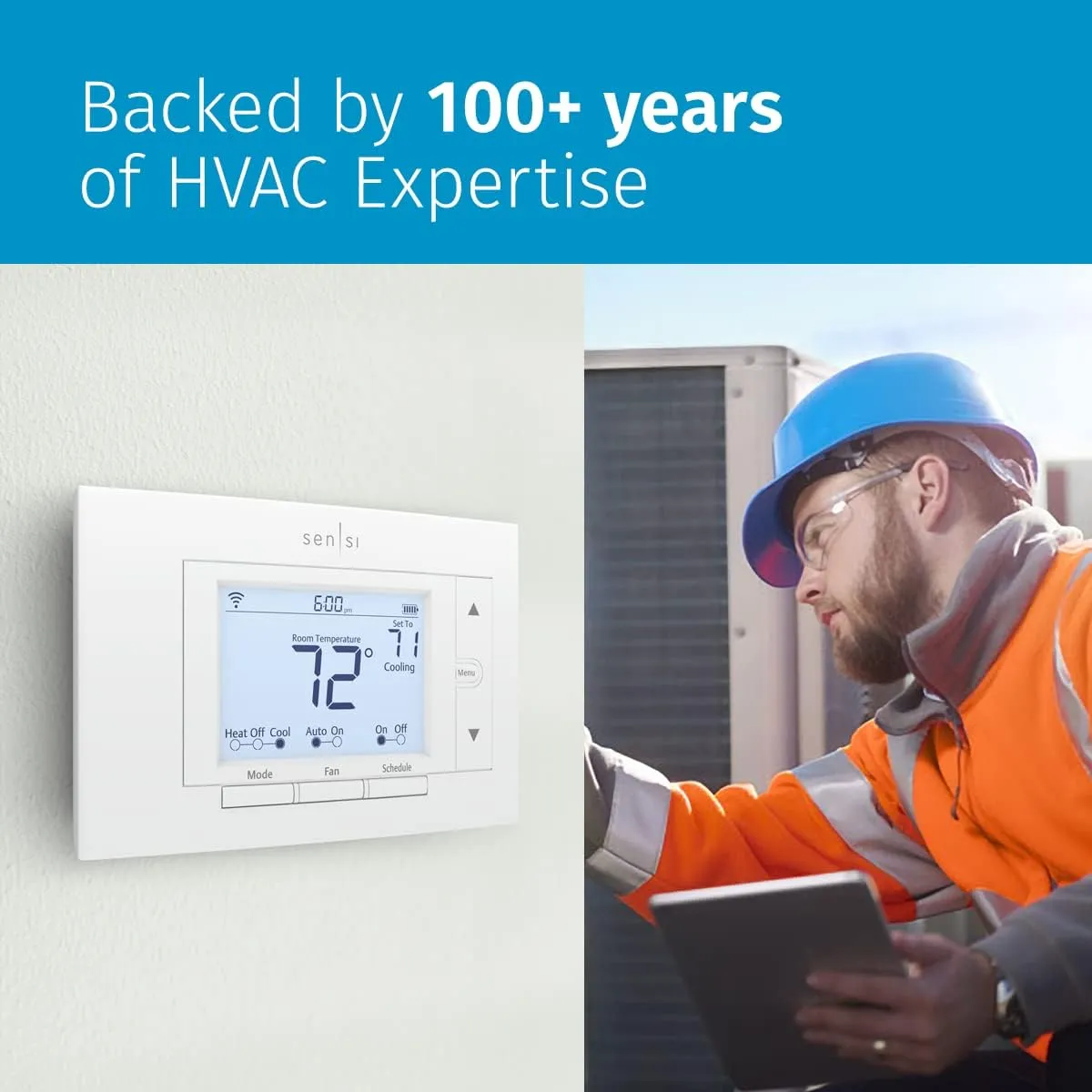
Sensi doesn’t pretend to be AI-driven.
What it offers instead is:
- Reliable scheduling
- Utility demand response support
- A clean app
- And compatibility with older HVAC systems
If you’re willing to manually set a pre-cooling schedule, Sensi can still deliver meaningful savings—especially when paired with California utility rebates.
It won’t optimize for you.
But it won’t fight you either.
4. Case Study: PG&E E-TOU-C Bill Comparison (Real Numbers)
Let’s talk about money.
Home Profile
- Location: Fresno, CA
- Home Size: 1,800 sq. ft.
- Plan: PG&E E-TOU-C
- Month: July heatwave
- Occupancy: Family of four
Scenario A: Standard Thermostat (The Default Mistake)
- AC set to 72°F all day
- No pre-cooling
- AC cycles heavily between 4 PM – 9 PM
Result:
- Peak energy usage during highest rates
- Heavy compressor runtime in the worst window
Estimated Monthly Bill: $412
Scenario B: Ecobee TOU-Optimized Strategy
- Pre-cool to 69°F from 2:00–3:45 PM
- Gradual drift to 78°F during peak
- Minimal compressor runtime after 4 PM
Result:
- Majority of cooling happens during cheap, solar-heavy hours
- Peak usage drops sharply
Estimated Monthly Bill: $318
The ROI Breakdown
- Monthly savings: ~$94
- Summer savings (4 months): ~$376
- Annual savings: $284 – $315
- Thermostat cost: ~$250
Payback period: ~9 months
After that?
Pure profit.
5. Step-by-Step: How to Optimize Your Thermostat for California TOU Plans
This is where most guides stop being useful.
So let’s be precise.
Step 1: Sync Your Utility Account
Most premium thermostats support OpenADR or direct utility APIs.
Connect:
- PG&E
- SCE
- SDG&E
This allows real-time awareness of:
- Peak events
- Rate changes
- Demand response opportunities
Without this, your thermostat is guessing.
Step 2: Set the “Super-Cool” Window
The sweet spot for most California homes:
🕑 2:00 PM – 3:45 PM
- Drop temperature 3–5°F below normal
- Let the house absorb cool while rates are low
- Stop aggressive cooling before 4 PM hits
Step 3: Enable Demand Response Programs
Programs like OhmConnect pay you for reducing usage during grid stress events.
Benefits include:
- Cash rewards
- Bill credits
- Bonus rebates
Your smart thermostat can automate participation—no manual effort required.
Step 4: Use Remote Sensors (Critical)
Place a sensor in:
- The bedroom
- The most used living space
This prevents:
- Overcooling empty rooms
- Under-cooling where it matters
Comfort matters. If your strategy isn’t livable, you won’t stick with it.
Smart Automation Meets Everyday Comfort
Today’s smart thermostats go far beyond simple temperature control — they bring automation, energy efficiency, and sleek design into one powerful package. Whether it’s Honeywell’s reliable precision or EcoBee’s futuristic intelligence, the right thermostat can make your home both smarter and more comfortable. These devices let you fine-tune heating and cooling remotely, save on energy bills, and integrate seamlessly with Alexa, Google Assistant, or Apple HomeKit — giving you total control with just a tap or voice command.
Honeywell RTH9600WF – Simple, Steady, and Smart
The Honeywell Home RTH9600WF stands out for homeowners who value stability over flash. Its customizable touchscreen and easy 7-day scheduling keep your home at the perfect temperature without overcomplication. While it lacks advanced learning features, its Wi-Fi connectivity, app control, and dependable performance make it the smart choice for anyone wanting efficiency without the learning curve. It’s the thermostat equivalent of a Toyota Camry — reliable, affordable, and built to last.
EcoBee Premium & Amazon Smart Thermostat – The Future and the Foundation
For tech lovers, the EcoBee Smart Thermostat Premium brings high-end intelligence with occupancy detection, room sensors, and built-in air quality monitoring. It’s ideal for those who want their thermostat to work with them, adapting to habits and comfort zones automatically. Meanwhile, the Amazon Smart Thermostat strips things down to the essentials — affordable, Alexa-friendly, and energy-efficient. Whether you prefer premium innovation or simple practicality, both prove that smart automation can fit every budget and lifestyle.
6. Final Verdict: Which Smart Thermostat Should You Buy?
There’s no single “best” thermostat for everyone—but there is a best choice for how you think.
The “Data Nerd” Pick
Ecobee Smart Thermostat Premium
Best for homeowners who want transparency, control, and maximum TOU savings.
The “Set-and-Forget” Pick
Google Nest Learning Thermostat (4th Gen)
Best for hands-off users who want automation without micromanagement.
The “Budget Savior” Pick
Amazon Smart Thermostat
Often under $80 with utility rebates—and still TOU-capable when configured correctly.
The Bigger Picture
California’s energy problem isn’t going away.
Rates will rise.
TOU windows will tighten.
Peak pricing will get harsher.
Smart thermostats aren’t a luxury anymore—they’re defensive infrastructure for your home.
A one-time $250 decision today can quietly save you thousands over the next decade.
And in a state where every kilowatt matters, timing is everything.
1. What is the best smart thermostat for California TOU plans?
The Ecobee Smart Thermostat Premium is widely considered the best choice for California’s Time-of-Use (TOU) plans. It uses real-time weather data, occupancy sensors, and utility rate awareness to pre-cool your home before peak pricing hours, helping homeowners on PG&E, SCE, and SDG&E plans save $300 or more annually.
2. How does a smart thermostat save money on PG&E or SCE bills?
Smart thermostats save money by shifting energy use away from peak hours (4–9 PM) when rates can reach $0.55/kWh. Through automated “pre-cooling,” they lower your home’s temperature earlier in the day when electricity is cheaper, reducing costly AC runtime later and cutting monthly bills by 20–30%.
3. Do all smart thermostats work with California TOU schedules?
Not all do. Only select thermostats—like Ecobee Premium, Nest Learning Thermostat (4th Gen), and Emerson Sensi Touch 2—integrate with TOU-aware algorithms or allow manual pre-cooling setup. Cheaper models may lack dynamic scheduling or utility data sync, making them less effective for TOU savings.
4. Can a $250 thermostat really pay for itself in under a year?
Yes. In real PG&E case studies, a $250 Ecobee Premium setup reduced summer bills by around $94 per month, leading to $300–$350 in annual savings. That means most California homeowners can see a 9-month payback period—after which every dollar saved is profit.
5. Do California utilities offer rebates for smart thermostats?
Absolutely. PG&E, SCE, and SDG&E often provide $50–$125 rebates for qualifying smart thermostats that support demand response or OpenADR standards. When combined with annual energy savings, these rebates further reduce the payback time and make upgrading even more worthwhile.